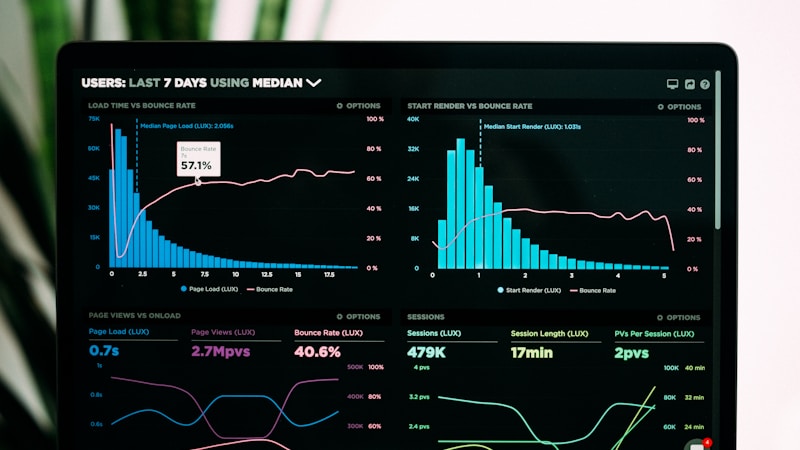

I've seen hundreds of business dashboards. Beautifully designed, packed with charts, impressive to look at. And completely ignored by the people they were built for.
The problem isn't the technology. It's the approach. Most dashboards are designed around data availability, not decision-making.
The Decision-First Approach
Before building or buying any dashboard, ask one question: what decisions should this help me make?
A good dashboard answers specific questions that lead to action:
- "Should I hire another salesperson?" → show pipeline velocity and capacity
- "Which products should we promote?" → show margin and movement trends
- "Is our marketing working?" → show lead quality and conversion, not just volume
Less Is More
Effective dashboards are ruthlessly focused. They show the few things that matter most, not everything that could be measured.
My rule of thumb: if you can't explain in one sentence why a metric is on the dashboard, remove it. Every chart should earn its place.
Context Makes Data Meaningful
A number without context is just a number. Is 500 sales good or bad? You need comparison:
- Compared to target (are we on track?)
- Compared to last period (are we improving?)
- Compared to the trend (is something changing?)
Good dashboards build context in automatically, so interpretation doesn't require additional research.
Action Thresholds
The best dashboards make action obvious. Colour coding shows what's normal, concerning, and critical. You don't have to analyse—you can see immediately what needs attention.
Green, amber, red works. So do trends with clear direction. The principle is the same: make the data's meaning obvious at a glance.
Regular Review Rhythms
A dashboard is only useful if people look at it. Build review into regular rhythms: weekly leadership meetings, monthly reviews, daily operations check-ins.
If the dashboard isn't part of how you work, it becomes decoration.
Getting Started
Don't try to build the perfect dashboard. Start with the 3-5 most important questions your business needs answered regularly. Build a simple dashboard that answers those. Use it. Refine it. Then expand.
A simple dashboard that gets used beats a sophisticated one that gets ignored.